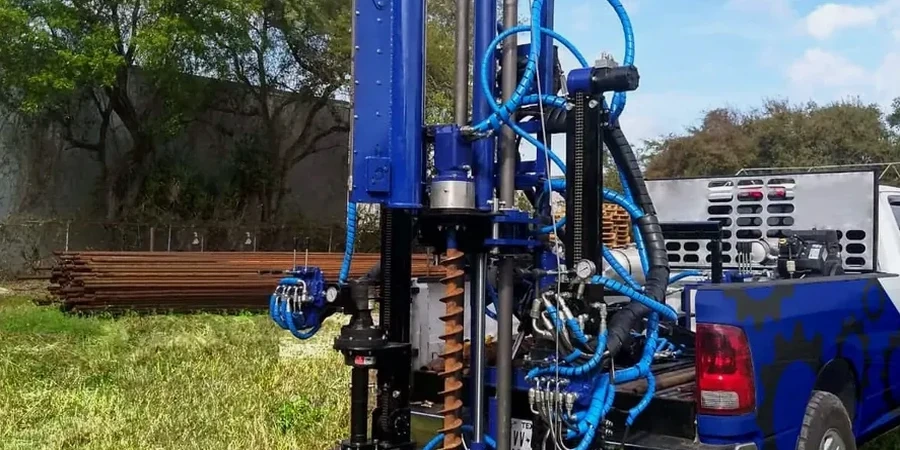
Whanganui soils don't read the textbook. The river terraces and alluvial plains flanking the Whanganui River mask a complex subsurface where soft silts, loose pumice sands, and dense gravel layers can alternate within a few metres. With a population of around 48,000 and a growing number of hillside subdivisions rising above the CBD, getting the ground model wrong early leads to expensive surprises later. Our team runs the Standard Penetration Test to cut through that uncertainty. We sink the split-spoon sampler into the ground, count the blows per 300 mm, and recover a disturbed sample all in one go. The resulting N-values feed directly into bearing capacity calculations, liquefaction screening per NZGS Module 4, and settlement estimates that local structural engineers trust. When the terrace gravels get too tight for SPT refusal, we often switch to a CPT rig to profile the deeper strata without losing resolution.
An SPT N-value isn't a number on a spreadsheet. It's a measured resistance that links directly to the bearing capacity and settlement performance of your Whanganui foundation.
Process and scope
A common pattern we see in Whanganui is what looks like competent ground turning soft below 6 metres. The old river channels left buried lenses of organic silt and peat that standard site walkovers miss completely. SPT energy calibration matters here because the weathered sandstone underlying the city's eastern suburbs can give misleadingly high blow counts if the hammer isn't delivering the correct 60% energy ratio. We run the test to NZS 4402:1986 Test 6.5.1 protocols, recording seating blows, incremental penetration, and full sample recovery in the log. The split-spoon brings up material you can examine with your own eyes: colour, grain size, moisture, any shell fragments or organic odour. That tactile confirmation alone has flagged contaminated fill on more than one central Whanganui redevelopment site before the excavators even arrived.
Local geotechnical context
The rig sits level on the pad, the safety hammer rides the cathead, and the drillers watch the rope turns like a metronome. That rhythm is the first quality control check anyone on site can see. If the rope wraps aren't consistent, the N-values scatter and the whole dataset loses credibility. In Whanganui, the real risk is over-reliance on SPT data alone in silty sands below the water table. The standard hammer can overestimate resistance in saturated loose sands, masking liquefaction susceptibility that a CPT would catch. We never let a single method drive the seismic design call. When the profile shows sands with N-values under 15 and the groundwater is shallow near the river, we recommend complementary testing and review against the NZGS Earthquake Geotechnical Engineering Practice guidelines before signing off on ground improvement or deep foundation recommendations.
Quick answers
How much does SPT testing cost for a Whanganui residential site?
For a typical single-dwelling investigation with two to three boreholes to depths of 6-10 metres, SPT testing in Whanganui generally runs between NZ$920 and NZ$1,090 per borehole. The total depends on access, depth, and whether we're drilling through terrace gravels or softer alluvium. Mobilisation, traffic management if you're on a busy street, and laboratory testing on recovered samples are quoted separately. We provide a fixed-price proposal after reviewing the site location and your engineer's scope.
What depth do you typically test with SPT in Whanganui?
Depends entirely on the ground profile and the foundation load. For a two-storey residential slab on the river terraces, we usually advance to 8-10 metres, taking SPT samples at 1.5 m intervals. Hillside sites on the eastern suburbs where weathered sandstone is shallower may only need 4-6 metres. If the structural engineer requires data for deep piles, we push deeper or switch methods at refusal.
Can SPT alone determine if my Whanganui site has liquefaction risk?
SPT N-values are a key input for liquefaction screening under the NZGS Module 4 framework, but they have limitations in silty sands at shallow depth. We nearly always recommend pairing SPT with a CPT sounding on the same site if the preliminary screening flags marginal risk. The cone provides a continuous resistance profile that picks up thin loose layers the SPT might miss. The final call on liquefaction risk should come from your geotechnical engineer after reviewing both datasets.