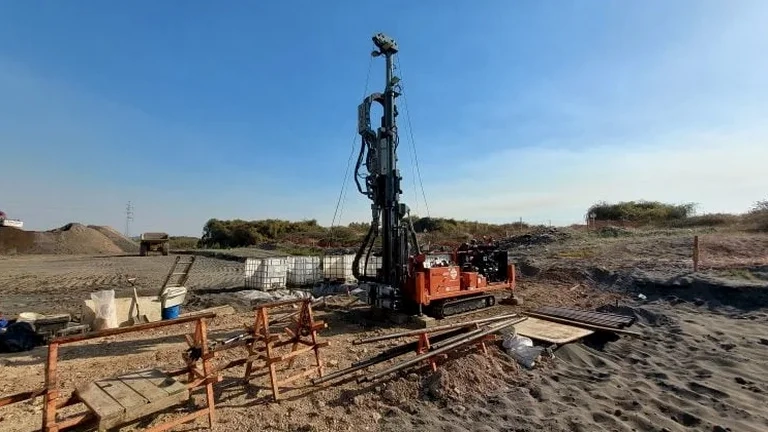
Whanganui’s geological tapestry, from the sandy loams of its coastal terraces to the deep, compressible alluvium flanking the great river, demands a level of subsurface scrutiny that remote sensing simply cannot provide. With a population surpassing 48,000 and a built environment expanding across the historic marine terrace sequences, the direct observation of soil stratification becomes a non-negotiable step in any solid geotechnical investigation. An exploratory test pit serves as this essential window into the ground, allowing a site engineer to log the precise depth of the Mowhanau Formation or identify the transition from weathered andesite gravels to underlying competent rock. When combined with targeted laboratory testing, the data extracted from a well-executed exploratory test pit informs everything from footing design to excavation methodology on the challenging terraces overlooking the Tasman Sea.
Direct visual logging of a test pit wall remains the only method to reliably map thin sand partings and slickensided surfaces that govern slope stability in the Wanganui Basin.
Quick answers
What is the typical cost range for an exploratory test pit in Whanganui?
For a standard pit excavated to 3.0-4.0 metres with full logging, sampling, and backfill, the cost generally ranges from NZ$960 to NZ$1,420. This estimate includes mobilisation within the urban area, traffic management where required, and the production of a factual report with laboratory test results.
How deep can you safely excavate a test pit on a Whanganui site?
The maximum depth is governed by the stability of the soil and the available safe working space. While our excavator can reach 4.5 metres in cohesive materials, any excavation deeper than 1.5 metres requires benching or hydraulic shoring systems in compliance with WorkSafe New Zealand regulations to prevent collapse.
Can you take undisturbed samples from an exploratory test pit?
Yes, obtaining high-quality undisturbed samples is a primary objective. We carefully trim block samples from the base or sidewalls and seal them in wax and cling film to preserve their in-situ moisture and structure. For deeper or softer intervals, thin-walled Shelby tubes can be pushed from the pit floor.
What happens to the test pit after the investigation is complete?
The pit is backfilled using the excavated spoil in a controlled manner, typically compacted in layers of no more than 200 mm thickness to approximate the original density. If the pit is located under a future pavement or building footprint, we can place an engineered granular fill and densify it using a compaction plate to meet NZS 4404 specifications.
How does a test pit compare to a machine borehole for site investigation?
A test pit provides a large-scale, continuous vertical exposure that reveals soil fabric, fissures, and thin seams which are easily missed in the disturbed cuttings from a borehole. While boreholes, particularly those with SPT testing, can reach far greater depths, the test pit is superior for mapping shallow, complex strata and for extracting large, intact block samples for triaxial testing.