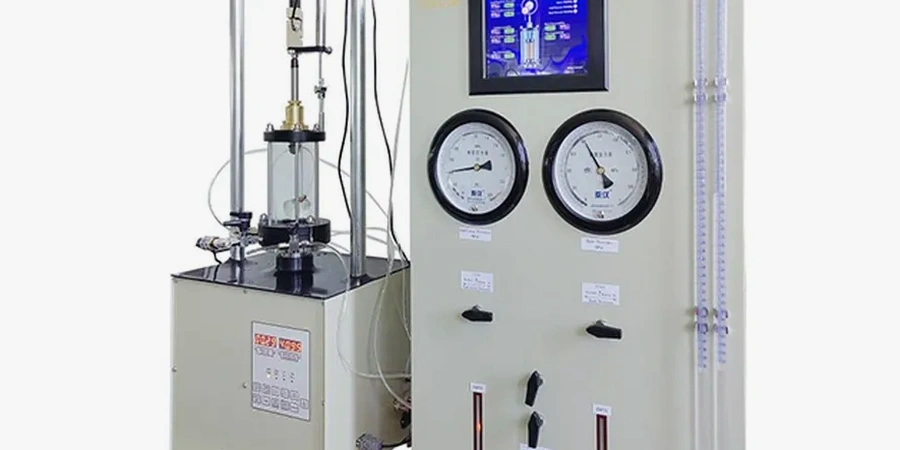
In Whanganui, the ground has a long memory. The city sits on a mix of ancient marine terraces, young alluvial silts near the Whanganui River, and patches of volcanic ash that weather into tricky, sensitive clay. When a loading plan relies on generic shear strength from a borehole log, you can end up overdesigning or missing a failure plane entirely. The triaxial test cuts through that. It replicates the actual confining pressure and drainage conditions the soil will see under the foundation or behind the retaining wall. Our lab runs multistage and single-stage triaxial tests on Shelby tube samples taken from sites across Springvale, Gonville, and the river corridor. We pair the test with a CPT to refine the stratigraphic profile before selecting specimens, and for deeper cohesive layers we often recommend complementing with Atterberg limits to correlate plasticity with the measured friction angle.
Triaxial testing is not just a lab curve. It is the difference between a working platform that settles 5 mm and one that fails during the first wet winter.
Quick answers
What does a triaxial test cost in Whanganui?
A standard three-specimen triaxial test program (CU or CD) typically ranges from NZ$3,610 to NZ$4,660, depending on the number of confining stages and whether multistage testing is required. This includes specimen preparation, saturation, shearing, and the engineering report with strength parameters.
How long does a triaxial test take from sampling to results?
The lab phase takes 7 to 10 business days for a standard three-specimen program. Consolidation alone can require 24 to 48 hours for Whanganui silts with low permeability. If the site program needs faster results, we can discuss a single-stage CU test with reduced turnaround.
Which triaxial test type is right for my Whanganui site?
It depends on the drainage conditions during loading. For free-draining sands found in the coastal dunes, a consolidated-drained (CD) test gives effective strength parameters. For the river silts and clays common in central Whanganui, a consolidated-undrained (CU) test with pore pressure measurement provides undrained strength for short-term stability and effective stress parameters for long-term settlement analysis.